


Trademark Basics For Business Owners
Trademark Registration For Business Owners
What is a Trademark?
A trademark is a word or symbol capable of distinguishing the goods or services of one business from those of another business. Trademarks are protected by intellectual property rights. Trademark rights ultimately develop from the actual “use” a trademark and not just registration. Therefore, even a unregistered trademark can have economic value for long as you continue to use the mark in commerce to indicate the source of your goods and services. The benefit of a federal trademark registration is that it puts others on notice that your brand exists. Once your trademark is registered, it appears in the United States Patent and Trademark Office’s (USPTO) online database and places the world on notice of your trademark rights.
How Much Is Trademark Registration?
Excluding attorneys fees, the trademark filing cost of a Federal trademark is approximately $275 per international trademark class. Additional costs can occur if you file an intent to use application, which will require a “statement of use” to be filed later along with a specimen of such use. Requesting extension of time to show use of mark (if not part of initial application) is an additional $125 per international trademark class, and filing a showing of use is $100 per international trademark class. Federal registration will grant a trademark owner nationwide priority in the trademark, and that registration acts as a presumption of ownership.
After a trademark registers, you will be required to pay maintenance fees to keep your mark federally registered:
- Filing of a Declaration of Use after 5 Years (§8 declaration) is $125 per class;
- Filing a Declaration of Use after 5 years (§8 declaration) combined with Declaration of Incontestability (§15 declaration) is $325 per class;
- Filing a Declaration of Use and Application for Renewal each 10 years (Combined §8 declaration and §9 renewal) is $425 per class; and
- Filing a Declaration of Incontestability (§15 declaration) is $200 per class.
How Long Until A Trademark Registers?
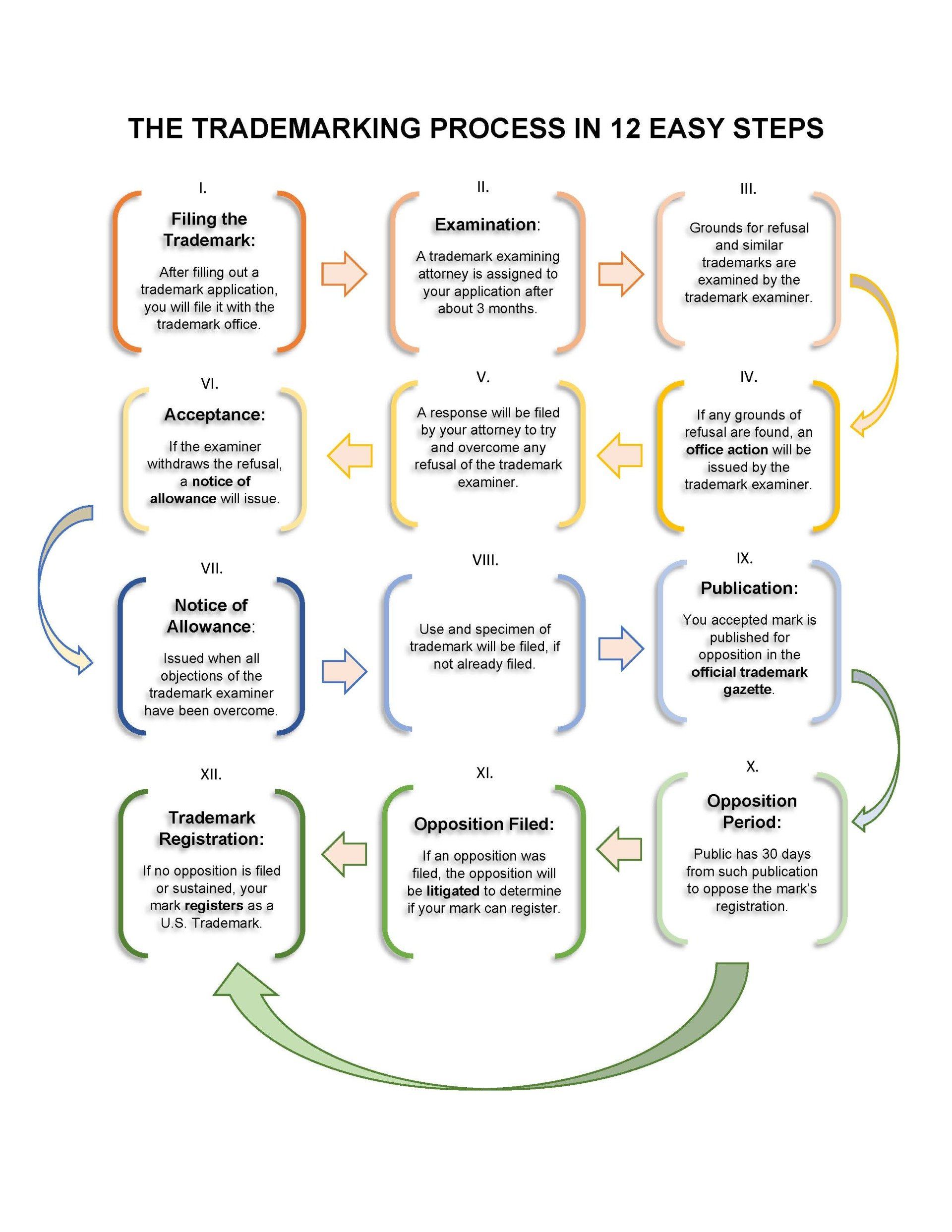
The trademark registration process takes six to nine months, however people who apply after your trademark filing get placed in a queue behind your original application and, if your trademark application is accepted, then everyone with confusingly similar marks in the queue gets denied. It is important to file a trademark as early as possible to ensure your trademark application is given priority. Often times the trademark office will generate an "office action" to address certain issues with your trademark filing, some of the more common issues found in office actions are:
- The trademark examiner has made a preliminary determination that there is a likelihood of confusion between your mark and another registered mark. A “likelihood of confusion” occurs when two marks look or sound similar to one another and are used in connection with the same or similar class of goods or services. A trademark examiner is tasked with not allowing confusingly similar marks to register;
- You've attempted to register something that cannot be trademarked, such as a surname, descriptive mark or geographic name; and/or
- Some other error exists in your trademark filing.
Do I need a domain and a trademark?
Domain name registration is not “use” of a trademark per se, and such use does not confer trademark rights in that name or phrase. A domain name alone will not be capable of trademark registration unless it is source identifying. So if you want a trademark in your domain name, and that domain name is used in connection with specified products and services for source identification, then you may register your domain name. Trademark law typically declines to protect generic terms often used in domains in an effort to promote competition; however, like "booking.com" or "1800flowers.com", it may be possible to show sufficient distinctiveness to merit a trademark. It is best to consult an attorney before attempting to register a domain name.
Can I Keep A Competitor From Using A Trademark By Registering That Mark First?
In the event a trademark is filed without an intent to use it, then that trademark is subject to cancellation for both non-use and fraud on the trademark office. Trademarks should only be filed if you intend to use them. If you determine that competitor litigation is necessary, a trademark registration may be expedited in the USPTO in a limited number of circumstances, including matters of litigation such as infringement or the need to obtain a U.S. trademark to obtain a foreign registration. A person seeking an expedited registration must fill out a petition and show a significant need for such expedited trademark processing.
Can I Trademark A Sound?
Sounds can be trademarked in the same manner as you would trademark words or designs provided such sounds are distinctive to a business. Sounds which are merely functional cannot be trademarked. For instance, you can file a trademark on a company’s jingle (e.g. AT&T, or McDonald’s, etc.)
Can I Keep The Public From Seeing Who Owns My Trademark?
No. All Patent and Trademark Office filings are open to the public and accessible by all on the USPTO’s website. Enforcing your trademark rights is your responsibility. It's important to monitor your trademark and act promptly if you believe someone is infringing your brand. To learn more about filing a trademark or about trademark litigation, please contact our trademark attorneys at the Wilson Legal Group.









Have an idea for a blog? Click and request a blog and we will let you know when we post it!